
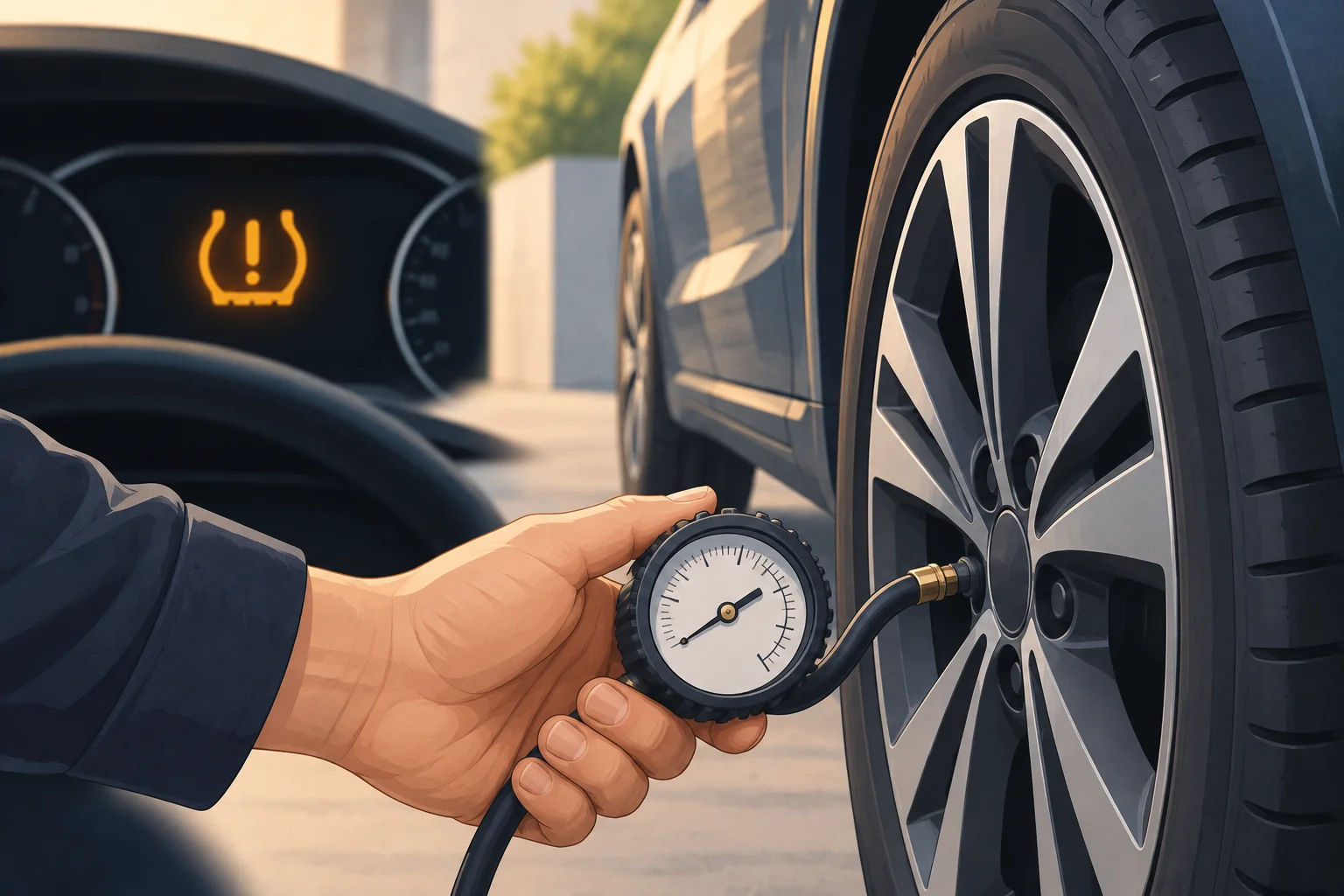
Investigate the warning before resetting it
A tyre-pressure warning needs attention even if the car feels normal. TPMS is a warning system, not a diagnosis of the cause. It may alert you to low pressure or indicate a system problem, depending on the vehicle and display. Check the handbook for the exact symbol or message, particularly if it flashes or appears with another warning.
If the warning comes on while driving, reduce speed smoothly and find a safe place to stop and investigate. Do not continue normally on a visibly flat tyre. Note which tyre the display identifies, if it gives individual readings. A photo of the dashboard taken when safely parked can help you explain the problem to a tyre professional.
Measure pressure against the vehicle's instructions
Use the cold-pressure settings on the vehicle's label or in its handbook. The front and rear settings may differ, and a fully loaded car may need another specified setting. The maximum pressure printed on the tyre is not the everyday target for your particular car. Use a suitable gauge and check all road tyres rather than only the one you suspect.
Record the readings and the units used. A note in bar is not interchangeable with the same number in psi. If you are unsure how to interpret the label, send a clear photo and ask for help. Do not keep adding air by guesswork, or release pressure from a hot tyre simply to make it match a cold setting.
Why the system cannot replace a physical check
Some systems use sensors to measure pressure directly, while others infer changes from wheel behaviour. What the driver sees and how the system is reset therefore depend on the car. TyreSafe explains that TPMS supports the driver but does not remove the need for routine pressure, tread and condition checks.
Even where numerical readings are available, the screen does not show every tyre defect. A tyre can have a cut or other damage while still displaying pressure. Equally, a warning is not proof that an expensive sensor needs replacement. Give the fitter both the warning information and the measured pressures, then let inspection establish the next step.
A returning warning is useful evidence
If a tyre loses pressure again after correction, explain how quickly it happens. “From the correct cold setting to noticeably lower in two days” is more informative than “the light is annoying”. Mention any pothole impact, recent fitting or previous puncture repair. A leak may involve the tyre, valve or wheel, so the investigation should not stop at looking for a nail.
Temperature changes can also influence pressure, but they should not be used to dismiss persistent loss from one wheel. Keep a brief record under comparable cold conditions. Do not repeatedly erase the warning while ignoring the underlying readings. If pressure is dropping quickly or the tyre looks damaged, seek assistance rather than relying on another top-up.
Reset only after the required checks
Follow the vehicle-specific procedure after pressures are corrected and any fault is addressed. Some cars need a menu operation or relearning process; others behave differently. There is no universal button sequence that is safe to recommend for every make and year. Starting a reset at the wrong pressures can give misleading reassurance.
If the warning remains, tell the technician whether it appeared before or after tyre fitting and whether any sensor work was carried out. Ask what testing is proposed before authorising parts. Replacing a tyre, servicing a valve and replacing an electronic sensor are different jobs, even though they all involve the same wheel area.
What to send when asking for help
Send your postcode, vehicle details, tyre size and a photo of the dashboard message if available. Include the actual pressure readings, how long the warning has been present and any recent event. Say whether the car is safely parked and whether the tyre is flat. You do not need to diagnose the sensor or leak yourself.
Best Mobile Tyres can discuss suitable tyre inspection, fitting and the work available for your vehicle around Dudley and nearby areas. Explain any deadline, but wait for confirmation of availability. The aim is to identify why the warning appeared and address the tyre condition, not simply make the dashboard light disappear.
This guide is general information, not a remote tyre inspection. If the vehicle or location is unsafe, stop driving and seek appropriate professional assistance.