
A missing adapter can change the appointment
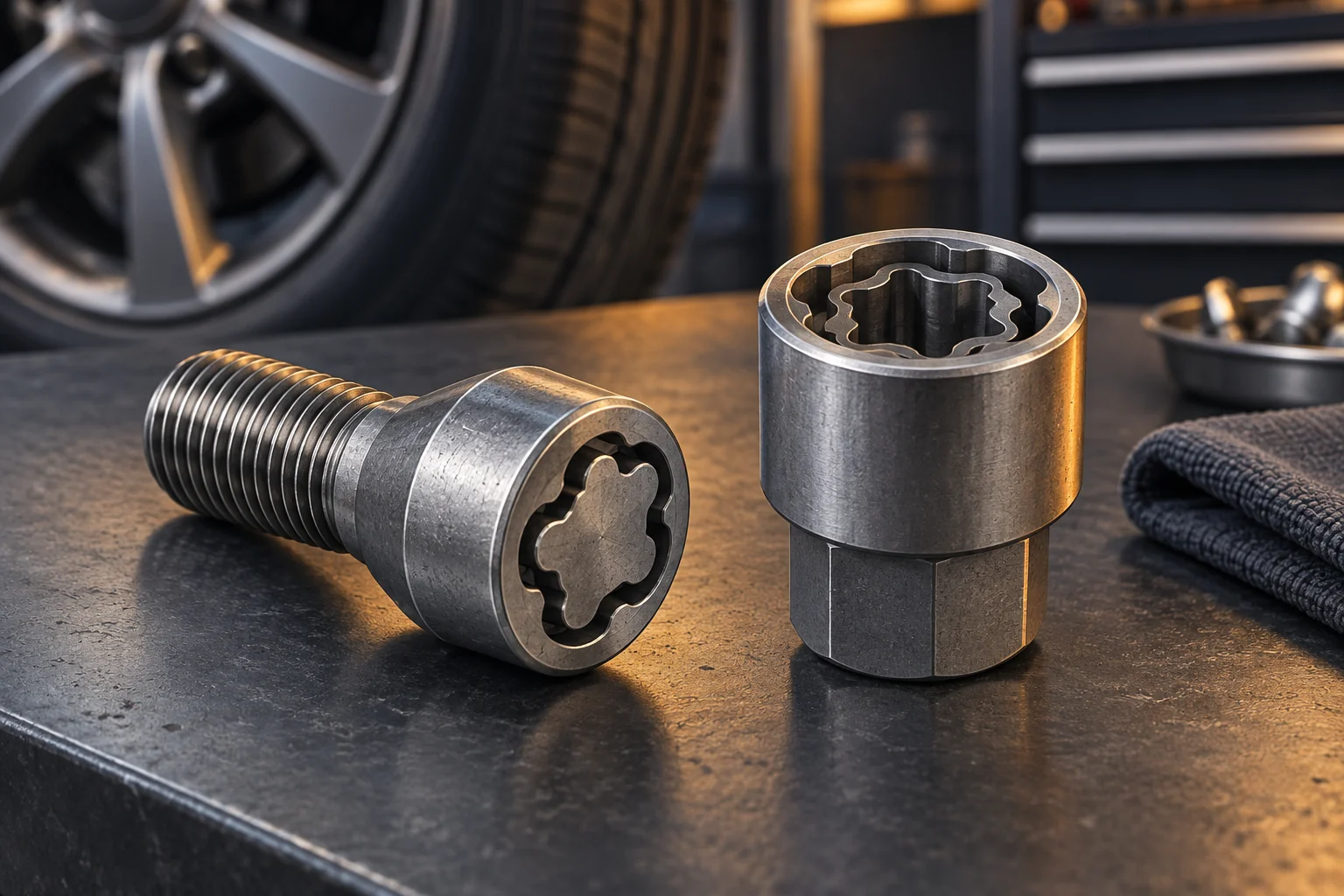
A locking wheel-nut key is a shaped adapter used with the matching security nut or bolt. It is separate from the ignition key. Without it, a fitter may be unable to remove a wheel using the normal equipment. If you have a puncture or are booking replacement tyres, mention the missing adapter before anyone travels to your vehicle.
Do not assume every mobile tyre van carries a universal key. Designs differ, and a key that looks similar may not match. The right next step depends on the locking fastener, its condition, the vehicle and whether you need urgent help. Specialist removal is not automatically included in an ordinary tyre fitting quote and cannot be promised from the vehicle model alone.
Search methodically before ordering anything
Check the original tool kit, spare-wheel well, boot-floor compartments, glove box and centre console. Look inside the wheel-brace pouch rather than only around it. If a garage recently worked on the wheels, ask whether the adapter was returned and where it was placed. A small metal adapter can be easy to overlook among towing eyes and ordinary sockets.
Then check the vehicle paperwork for a security-fastener code card, packaging or a receipt for aftermarket wheel locks. Photograph any identifying information for your own records. Do not post the code publicly. If you find an adapter, compare it carefully and ask the fitter to verify it rather than forcing a poor fit onto the lock.
A replacement key may be the least disruptive option
For non-urgent work, contact the vehicle dealer or the locking-fastener manufacturer about a replacement. McGard, for example, provides a replacement-key service through its customer support process. The information required depends on the product, and an identifying code can be valuable. Do not order a random online adapter solely because a listing names your car.
Ask what evidence or photographs are needed, the expected supply time and the full cost. Keep the car safely parked while waiting if a tyre is unusable. Ordering the correct key may preserve the original locks and avoid extraction, but it is only useful if the supplied key genuinely matches and the existing fastener is not damaged.
When specialist removal may be needed
If the key cannot be sourced in time, a professional may assess whether the lock can be removed with specialist equipment. The technique and likely outcome depend on its design and access. Some locks have features that make removal more difficult. Corrosion, previous attempts and damage to the lock's face can further change the job.
Send a clear photo of the locking fastener in the wheel and explain what has already been tried. A photo is preparation, not a guarantee of removal or a fixed price. Ask whether the proposed work includes replacement fasteners, and whether a workshop visit or recovery may be necessary. Best Mobile Tyres will discuss what can be arranged rather than promise extraction for every vehicle.
Avoid turning a missing key into wheel damage
Do not hammer assorted sockets onto the fastener or drill it experimentally. A failed attempt can mark the alloy wheel, damage the fastener or make the eventual removal harder. If the wrong adapter slips, stop. More force is not evidence that the tool is correct, and improvised work can create a second problem alongside the original flat tyre.
Similarly, do not loosen the remaining fasteners and drive the car hoping the lock will release. Wheel security is essential. Leave the removal decision to someone with the correct equipment and a suitable working area. If you have already attempted removal, describe it honestly so the technician can inspect any consequences before proceeding.
Before and after the tyre appointment
When booking, separate the two requirements: getting the wheel off, and repairing or replacing the tyre. Confirm whether both can be handled by the same provider and what the quote covers. Tell them whether the vehicle can move safely or is immobilised, and provide the postcode, tyre size and photographs needed to prepare.
After the work, keep the correct adapter in a consistent place in the car so it is available for future wheel service. Record any new key code privately and check that the adapter has been returned before leaving a garage. A quick check before your next tyre appointment can prevent an avoidable delay when the van arrives.
This guide is general information, not a remote tyre inspection. If the vehicle or location is unsafe, stop driving and seek appropriate professional assistance.