
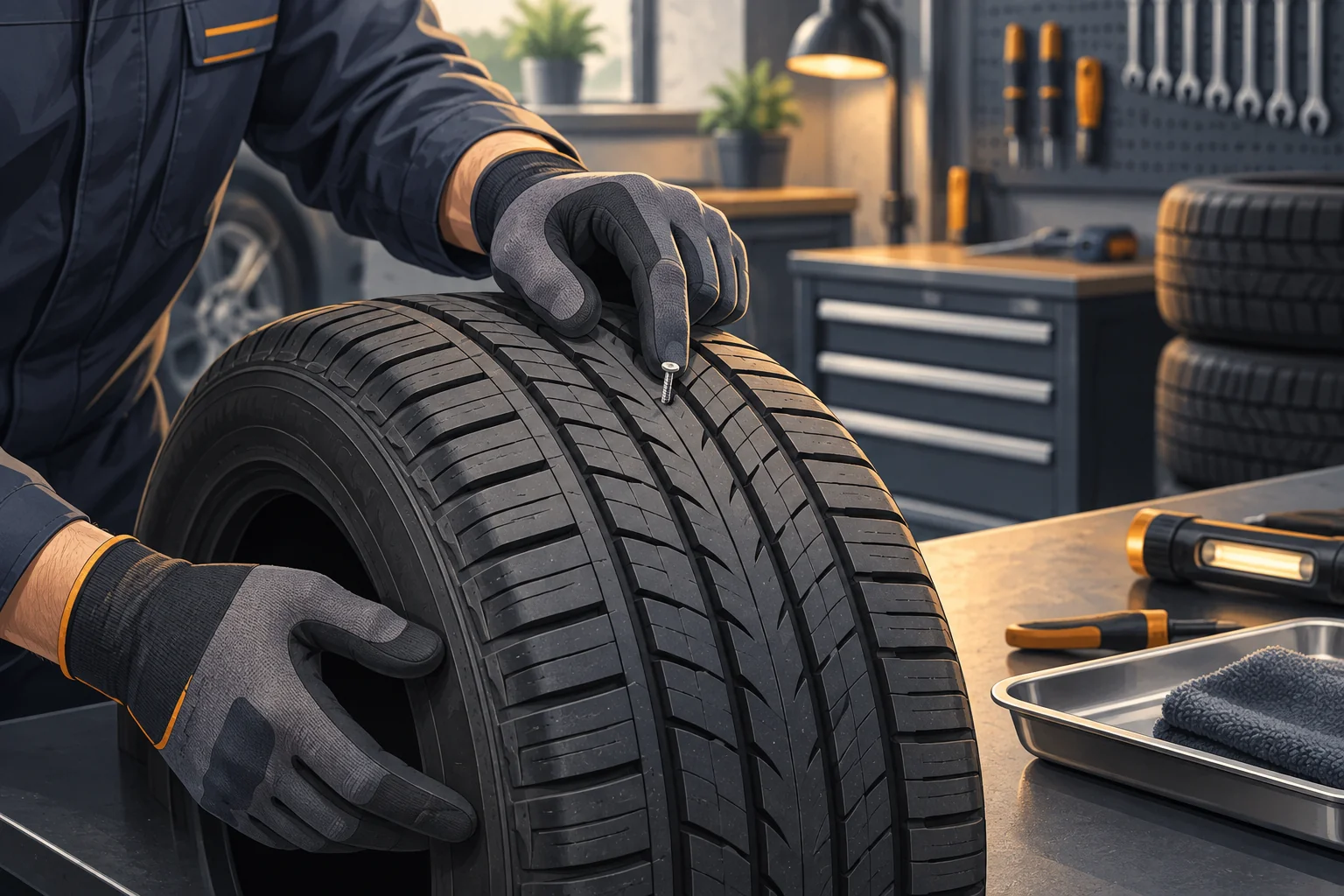
The short answer: sometimes, after inspection
A small puncture does not automatically mean buying another tyre. A repair may be possible when the damage is within the permitted repair area and the rest of the tyre is suitable. However, a screw visible in the tread is not enough to approve a repair. A technician needs to remove the tyre from the wheel and inspect its interior as well as its outside.
For a driver, the useful question is therefore not just “can you plug this hole?” It is “can this tyre safely return to service?” Tell the fitter what happened, whether you kept driving and whether the tyre has received any previous treatment. That history helps determine what should be inspected and which replacement options may be needed.
Where the puncture is makes a difference
BTMA guidance for minor repairs to passenger-car and light-van tyres describes a permitted central repair area and a maximum injury diameter of 6 mm. The technician checks the applicable limits; the position of a nail head is not a reliable way to measure the full injury. Damage at the shoulder or sidewall is outside a normal minor tread repair.
For example, a small screw in the permitted tread area may be a repair candidate. A cut extending into the shoulder is a different problem, even if both tyres lose air at the same rate. Do not remove the object just to photograph its length: you could turn a slow leak into a rapid loss of pressure.
Why driving flat can rule out a repair
Continued driving with insufficient pressure can damage the tyre internally. From outside, the tread may still look respectable; inside, the inspection may reveal abrasion or structural damage. Replacing a tyre in that situation is not simply a judgement about the visible hole. A repair cannot undo damage elsewhere in the casing.
Stop as soon as it is safe if a tyre becomes flat. Do not deliberately drive to a fitting appointment on the damaged tyre. Explain where the vehicle is parked so that mobile attendance or recovery can be considered. Photos should be taken only from a safe position, never from the traffic side of a stranded vehicle.
What a professional repair visit involves
The fitter first establishes whether the location and vehicle access are suitable. After wheel removal and tyre demounting, the tyre is assessed against the repair guidance and manufacturer requirements. If repair is suitable, the injury is treated using an appropriate permanent repair system. The tyre is then refitted, inflated and checked, with the wheel assembly balanced as required.
Ask what the quoted price includes and what happens if inspection finds that replacement is necessary. Have the locking wheel-nut key ready. The tyre size, brand and model also help the fitter prepare; a clear sidewall photo is often easier than trying to describe several separate markings over the phone.
Sealant and run-flat tyres need extra information
Tell the fitter if an emergency sealant or an external plug has already been used. A temporary measure is not proof that the tyre is suitable for permanent repair, but using sealant does not by itself answer every repair question either. The product, tyre condition and manufacturer's instructions must be considered during assessment.
Run-flat tyres require particular care. Repair policies differ between manufacturers, and use after pressure loss may affect eligibility. Give an honest estimate of the distance driven and the conditions. Do not assume that a run-flat can be repaired because it kept its shape, or that a photograph can reveal everything that happened inside it.
Questions to ask before booking
Can the repair be guaranteed from a photo? No: a picture helps prepare the visit, but it cannot replace the internal inspection. Does every nail require replacement? No: some injuries are repairable, subject to the full assessment. How much will it cost? The answer depends on the work, location and whether a replacement tyre is required.
For help around Dudley, Brierley Hill and nearby areas, send Best Mobile Tyres your postcode, complete tyre size and a short description. Include whether the tyre is completely flat and whether you drove on it. We can check availability and explain the next step before you commit to a visit.
This guide is general information, not a remote tyre inspection. If the vehicle or location is unsafe, stop driving and seek appropriate professional assistance.